

Calling fellow titlephiles: the love of movie titles
You can always tell the design and type geeks in a movie audience — they’re the ones geeking out over the opening credits. Also, me, on both counts. There’s something particularly impressive about well designed credits that hit every feel in my design feely thing: good type, excellent story telling, hidden meanings, beautiful creative, optimal shortness.
Two quick thoughts on shortness: 1) I remember an ad campaign for a short film festival that went something like “If it’s bad, at least it’s short.” Amen. 2) Je n’ai fait celle-ci plus longue que parce que je n’ai pas eu le loisir de la faire plus courte, which will no doubt apply to this post as well.
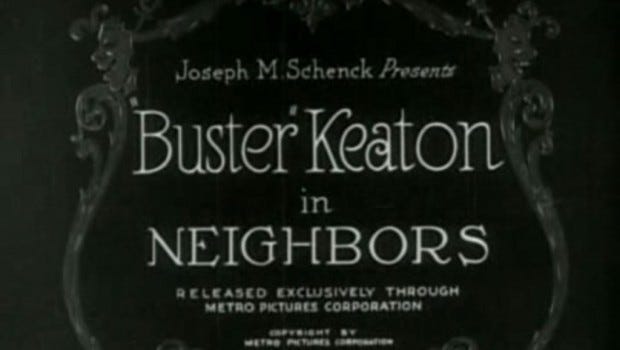
At any rate, movie titles have long been a particular guilty pleasure. They’ve been around as long as there have been movies, with simple title cards serving the purpose in silent films, often accompanied by musical scores as talkies came along.
Neighbors, 1920
Title sequences started to become more elaborate in the 1930s as the technology of movie-making improved. I’m told that James Whale’s 1936 production of Edna Ferber’s Show Boat (watch Show Boat title sequence on Art of the Title) is a perfect example, filled with moving paper cut-outs and accompanied by a medley of songs from the soundtrack. The titles were designed by John W. Harkrider, who served as both an art director and costume designer for MGM and Universal throughout the decade.
Saul Bass
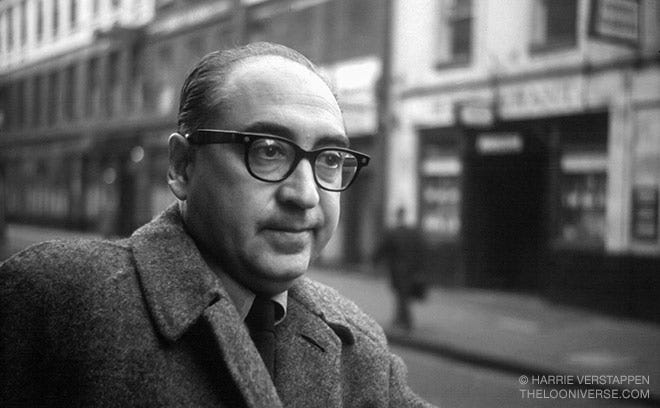
Saul Bass, father of modern film titles
The period that we’re really interested in begins in the 50s with the arrival of Saul Bass, the father of modern film titles. During his 40-year career, Bass worked with some of Hollywood’s best-known directors, including Alfred Hitchcock, Otto Preminger, Billy Wilder, Stanley Kubrick, and Martin Scorsese.
Bass was a typographer and graphic designer before he got into movies, and you can clearly see those influences in his work. He captured the design ethos of the 50s that was happening in advertising and print and modernized movie titles, which had languished in the overly decorative tradition established in Hollywood’s golden age. He got his start on Preminger’s 1955 classic The Man With the Golden Arm, starring Frank Sinatra, Eleanor Parker, and Kim Novak. Many of Hitchcock’s more memorable films were fronted by Bass titles, including North by Northwest, Psycho, and Vertigo. Here’s an excellent compilation of his titles from 1955 to 1995:
Art of the Title: Man with the Golden Arm
Kyle Cooper (Prologue Films), one of my favorite modern title designers, paying tribute to The Look of Saul Bass:
I love Bass’s work when it’s at its graphically simplest and most abstract. His graphic design sensibility really comes out in his movie posters, and he often did the posters for the films featuring his titles. His use of negative space is always so clever, defining not only the shape of the piece but also often contributing to the overall design as strongly as any of the actual elements.
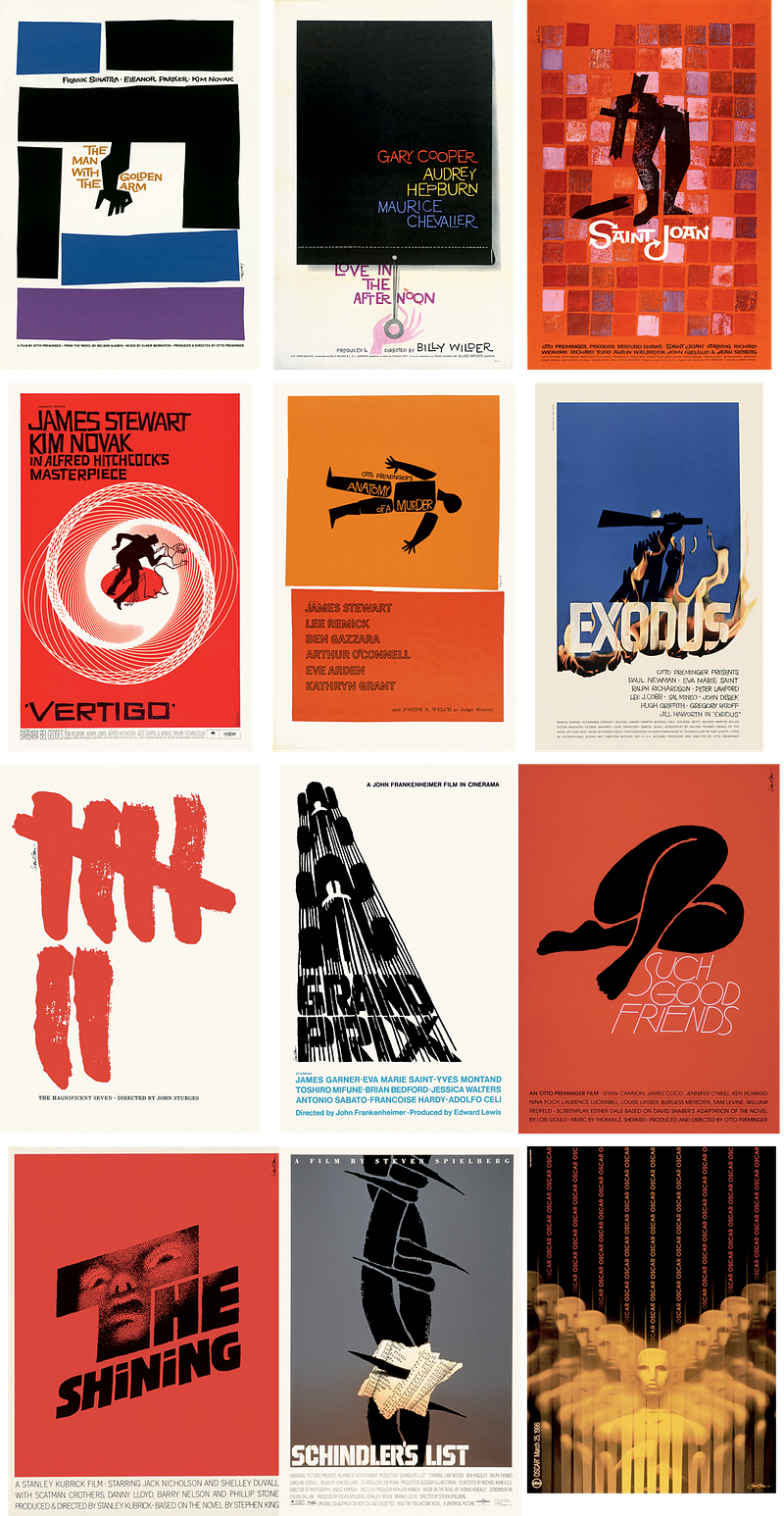
Bass was also an extremely talented logo designer — possibly one of the best — and is responsible for many strikingly simple identities that you’ll easily recognize:
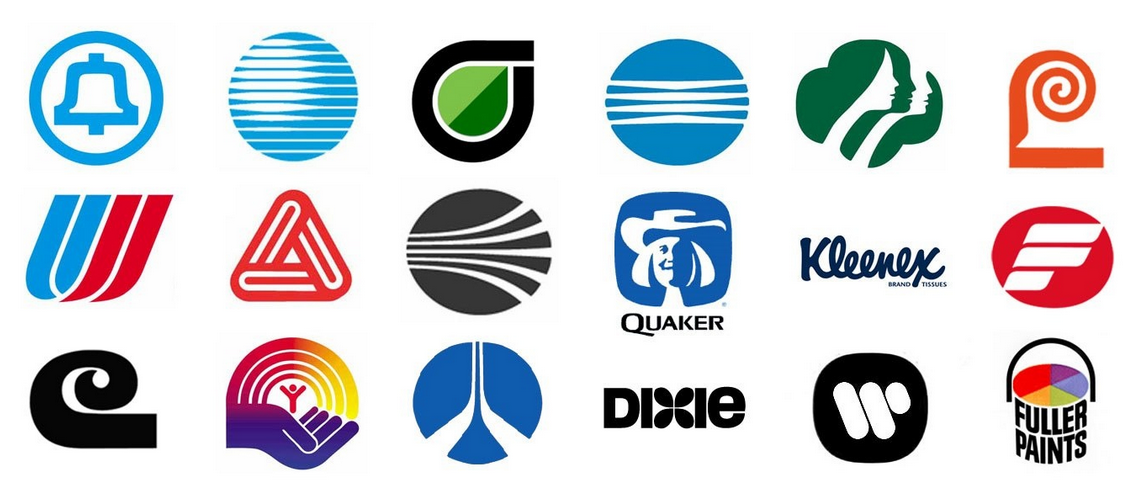
A sample of some of Saul Bass’ corporate identities, including the Bell System, AT&T, General Foods, Minolta, Girl Scouts, Lawry’s Foods, United Airlines, Avery, Continental Airlines, Quaker Foods, Kleenex, Frontier Airlines, Celanese, United Way, Rockwell International, Dixie, Warner Communications, and Fuller Paints
If you’re into his work and want an incredibly thorough overview, look for Jennifer Bass’s amazing Saul Bass: A Life in Film and Design [Amazon Affiliate link], a 428-page epic tribute to her father.
I want to make beautiful things, even if nobody cares, as opposed to ugly things. That’s my intent.
— SAUL BASS
Maurice Binder
A contemporary of Saul Bass, Maurice Binder is best known for creating one of the most famous series of title sequences: the gun-barrel opening titles of the James Bond films. He created them for 1962’s Dr. No, struck by an almost accidental moment of inspiration:
That was something I did in a hurry, because I had to get to a meeting with the producers in twenty minutes. I just happened to have little white, price tag stickers and I thought I’d use them as gun shots across the screen. We’d have James Bond walk through and fire, at which point blood comes down onscreen. That was about a twenty-minute storyboard I did, and they said, “This looks great!”
— MAURICE BINDER
There’s a very Bass-like quality to the animation sequences, though that probably speaks more to the era’s design sensitivities than to a specific influence.
Binder went on to design the title sequences for every Bond film until 1995’s GoldenEye except for From Russia with Love (1963) and Goldfinger (1964), both designed by Robert Brownjohn. He was succeeded by Daniel Kleinman, who has designed every title since GoldenEye with the exception of Quantum of Solace, which was designed by MK12.
He also designed the titles for many non-007 films, including most notably The Mouse That Roared, The Grass Is Greener, Fathom, and The Last Emperor. His 1963 titles for Hitchcock’s Charade are more Bass-like than even some of Bass’ own work.
Best movie titles of all time
Okay. So designers like Bass and Binder evolved the art into what we now think of as “movie title sequences.” Let’s slip ahead a little to 2015 and continue the incredibly short tradition I started with the World’s Worst Cars post, but in the opposite direction: what are the best titles ever? Predictably, opinions vary considerably. But there are a few standouts that come up again and again. Some of my favorites, in chronological order, inspired by various other top tens:
Vertigo
For all of the reasons listed above. Art of the Title: Vertigo.
The Thomas Crowne Affair
Ferro pioneered the split-screen effect seen here, which has become a classic in its own right. Art of the Title: Thomas Crowne Affair.
Monty Python’s Life of Brian
I couldn’t possibly make it through this post without including a classic Terry Gilliam animation.
Back to the Future
I particularly love title sequences that give away the story of the movie if you know what to look for. There are some brilliant touches in here, like the man hanging from the clock and the story of Doc Brown’s life told through newspaper clippings. This title was apparently a huge pain to shoot because of the need to keep all the clocks in sync and have them all ring at the same time. There was also a last-minute substitution of the dog food brand, which resulted in much less slippery food that needed to be heated up in the cans between takes. Gross. Art of the Title: Back to the Future.
Batman
I remember watching this one in the theatre as a 13-year-old and being so surprised when the camera pulls back at the end to reveal that it’s been the bat symbol the whole time. Art of the Title: Batman.
Se7en
Kyle Cooper basically reinvented the art of title design with his work on Se7en. Some of my favorite titles since have been his work, along with his crew at Prologue Films. Art of the Title: Se7en.
Gattaca
The simplicity of these titles, along with the highlighting of the letters that make up DNA, has always made this a favorite.
Catch Me if You Can
Kuntzel and Deygas’ masterful tribute to Saul Bass. Art of the Title: Catch Me if You Can (with interview!).
Kiss Kiss Bang Bang
Danny Yount’s heavily Bass-inspired titles for Shane Black’s Kiss Kiss Bang Bang (2005)
Danny Yount’s masterful tribute to Saul Bass (notice a theme?).
Mission Impossible: Ghost Protocol
Kyle Cooper again. I thought the fuse was an elegant way to tie the titles together and also to pay tribute to the original Mission Impossible (plus, Brad Bird!).
The Girl with the Dragon Tattoo
So beautiful and threatening simultaneously. Art of the Title: Girl with the Dragon Tattoo (with interview!).
The Secret Life of Walter Mitty
I didn’t love the film, but I absolutely loved the way they worked the titles into the scenery around Walter as he made his way into work.
Captain America: Winter Soldier
Erin Sarofsky’s closing titles for Anthony and Joe Russo’s Captain America: Winter Soldier (2014)
Marvel has brought back the closing credits in a big way, using them as a mechanism for previewing the next movie in the Marvel universe. Pixar has been doing the same by embedding bloopers and other little bits as a surprise and delight for the people who stick around. These are the closing credits for Captain America: Winter Soldier, the latest installment in the Captain America series. I love everything about these — the black and white treatment, strong use of negative space and symmetry, the graphical representation of each character as the actor’s name is displayed. Beautiful work, and an appropriate way to close out this post.

If you’re a fan of movie titles but haven’t yet discovered Art of the Title, you’re about to lose many, many hours of your life. I only wish that they made their clips embeddable because they’re much higher quality than most of the YouTube finds here. Either way, thank you, AoT crew, for your indispensable resource for titlephiles like myself.
Subscribe to JayGoldman.com
Get an email when I publish. Pick a stream — or everything. Unsubscribe anytime.